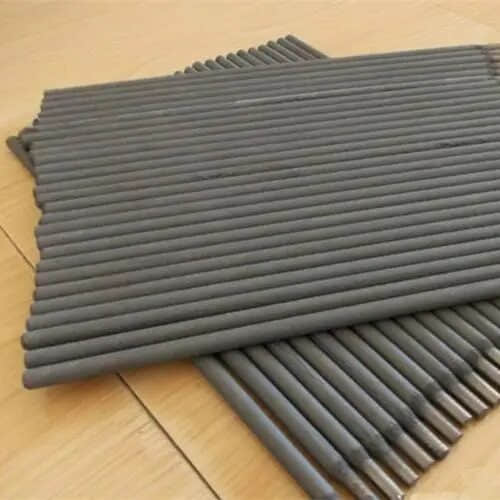
Engineered for excellent weldability and metallurgical stability, Haynes 25 welding electrodes deliver a strong, ductile weld deposit even under high-temperature exposure. This cobalt-chromium-tungsten-nickel alloy offers outstanding mechanical properties up to 2000°F (1093°C), making it ideal for components exposed to extreme thermal and oxidative stress. The combination of strength and corrosion resistance makes this alloy suitable for gas turbine engine parts, combustion liners, afterburner components, and industrial furnace fixtures.
5qwAt Metals And Welding Specialities, we supply Haynes 25 electrodes that provide smooth arc characteristics, minimal spatter, and excellent bead appearance. These electrodes are specially designed to ensure stable arc performance in both flat and out-of-position welding. When properly applied, they produce a uniform weld deposit that resists scaling, oxidation, and metal fatigue, even after prolonged service in high-stress environments.
The UNS R30605 (Haynes 25) alloy is known for its unique balance of properties — exceptional hot strength, outstanding oxidation resistance, and excellent forming characteristics. It maintains its integrity in both oxidizing and carburizing atmospheres, ensuring long-term performance and minimal maintenance. The ASTM F90 Grade designation guarantees that each electrode meets strict metallurgical standards for composition, microstructure, and performance reliability.
Professionals across the aerospace, power generation, and petrochemical industries rely on Metals And Welding Specialities for consistent quality and dependable delivery of Haynes 25 electrodes. Whether you are fabricating turbine blades, welding exhaust components, or repairing heat-resistant assemblies, these electrodes deliver results that meet both structural and operational demands. Every batch is tested to ensure chemical consistency, arc stability, and adherence to global welding standards.
As a trusted supplier, Metals And Welding Specialities is committed to providing premium cobalt-based alloys that help our clients achieve superior weld performance. Our Haynes 25 electrodes are available in a variety of diameters to suit specific welding processes and applications, offering optimal performance in GTAW and SMAW operations. When durability, strength, and resistance to high-temperature degradation are critical, Haynes 25 remains the alloy of choice.
Specification Haynes 25 Welding Electrodes
Property
Specification / Typical Value
Product Name
Haynes 25 Welding Electrodes (also sold as L-605 welding filler)
Universal / Trade Name
Haynes 25 / L-605
UNS Number
UNS R30605
ASTM / Industry Grade
ASTM F90 (commonly referenced); also available to AMS/AMS- and other customer specifications
Form
Welding electrodes / rods — available in multiple diameters for SMAW/GTAW/GMAW applications
Chemical Composition (typical ranges, wt%)
Cobalt (balance); Chromium 19.0–21.0%; Tungsten 14.0–16.0%; Nickel 9.0–11.0%; Iron ≤3.0%; Manganese 0.5–1.5%; Silicon 0.1–0.6%; Carbon 0.05–0.33%; traces of S, P & other residuals.
Microstructure / Metallurgy
Cobalt-based solid solution strengthened by Cr, W and Ni with stable high-temperature matrix; weld deposits exhibit good hot strength and oxidation resistance.
Typical Mechanical Properties (weld deposit, approximate)
Tensile strength and yield vary with post-weld treatment and cold work; designed for outstanding hot strength and creep resistance up to service temperatures—refer to customer datasheet for exact values.
Maximum Continuous Service Temperature
Continuous use to ~980°C (≈1800°F); retains useful strength at higher short-term exposures.
Corrosion / Oxidation Resistance
Excellent resistance to oxidation, carburization and sulphidation in high-temperature oxidizing/carburizing atmospheres.
Welding Processes
Recommended for GTAW (TIG) and SMAW (stick); GMAW (MIG) and other processes possible with appropriate wire/filler form. Submerged arc welding generally not recommended.
Welding Characteristics
Smooth, stable arc with low spatter when parameters are controlled; good bead appearance; performs well in most positions with appropriate electrode diameter.
Preheat / Interpass
Minimal preheat typically required; controlled interpass temperatures and low restraint recommended to avoid distortion and to preserve high-temperature properties.
Post-weld Treatment
Mechanical cold work or controlled heat treatments may be applied to optimize creep/rupture properties depending on application—follow engineering specification.
Available Diameters (typical)
Common electrode diameters from 1.6 mm up to 4.8 mm (and custom sizes on request) — also available as welding wire spools for GMAW/GTAW.
Packaging
Sealed cartons, moisture-resistant reels or spools; custom kitting and traceability available on request.
Typical Applications
Gas turbine components, combustion liners, afterburner parts, industrial furnace hardware, high-temp shafts and components requiring oxidation and hot-strength performance.
Standards & Equivalents
UNS R30605; also referenced as Alloy L-605, Haynes® 25; available to meet AMS/ASTM/ISO variants depending on customer requirement.
Supplier / Traceability
Supplied with material certification and batch traceability; chemical and mechanical test reports available per order.
Notes / Handling
Store in dry conditions; follow standard handling for high-performance cobalt alloy electrodes. Observe workplace safety for cobalt-containing materials.
Equivalent Grade Of AWS ENiCrMo-4 Coated Electrodes
Standard
Grade / Specification
AWS
ENiCrMo-4
UNS Number
N10276
ASTM
ASTM B574 / B575 / B619 / B622 / B626
ISO
14172 – ENiCrMo-4
Trade Name
Hastelloy C-276
DIN
2.4819
Haynes 25 Welding Electrodes Chemical Composition
Element
Minimum (%)
Maximum (%)
Carbon (C)
0.05
0.15
Manganese (Mn)
1.00
2.00
Silicon (Si)
–
0.40
Phosphorus (P)
–
0.040
Sulfur (S)
–
0.030
Chromium (Cr)
19.00
21.00
Nickel (Ni)
9.00
11.00
Tungsten (W)
14.00
16.00
Iron (Fe)
–
3.00
Cobalt (Co)
Balance
–